 "There is time for work. And time for love." said Coco Chanel. "That leaves no other time."
Saturday, March 7, 2009

Lord Byron, "All Is Vanity," Says the Preacher
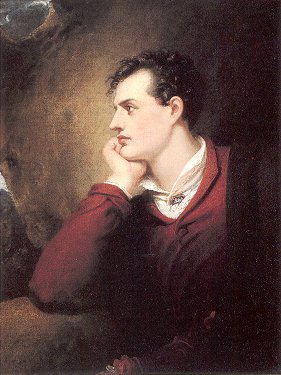 'All Is Vanity,' Saith the Preacher
by Lord Byron
(1788-1824)
Fame, wisdom, love, and power were mine,
And health and youth possessed me;
My goblets blushed from every vine,
And lovely forms caressed me;
I sunned my heart in beauty' eyes,
And felt my soul grow tender;
All earth can give, or mortal prize,
Was mine of regal splendour.
I strive to number o'er what days
Remembrance can discover,
Which all that life or earth displays
Would lure me to live over.
There rose no day, there rolled no hour
Of pleasure unembittered;
And not a trapping decked my power
That galled not while it glittered.
The serpent of the field, by art
And spells, is won from harming;
But that which soils around the heart,
Oh! who hath power of charming?
It will not list to wisdom's lore,
Nor music's voice can lure it;
But there it stings for evermore
The soul that must endure it.
All Is Vanity by Charles Gilbert
 This ambiguous illusion by Charles Gilbert is titled "All Is Vanity," signaling a conscious connection with Ecclesiastes. The painting faithfully reflects the ambiguity of the book since both portray simultaneously the beauty of life together with the certainty of approaching death. In the image, an innocent portrayal of a young woman before a mirror seems to project the image of a skull.
The Sea-wolf by Jack London
 The Sea-wolf,
by Jack London (McClure Publications, 1917).
In The Sea-Wolf by Jack London, the character Wolf Larsen reads Ecclesiastes 2:8-9, 11; 9:2-6 in full, and then proclaims, "The Preacher who was king over Israel in Jerusalem thought as I think." For all the limitations in life, he appreciated its superiority over death (pages 106-107).
Tess of the D'Urbervilles by Thomas Hardy

 Tess quotes "all is vanity" in reference to her wasted life, in Thomas Hardy's Tess of the D'Urbervilles.
Ulysses, by James Joyce
 I don't think this has anything to do with Ecclesiastes, but it uses the phrase 'vanity of vanities' (page 652).
Ulysses, by James Joyce.
Romeo's Oxymorons

 Act 1, Scene 1 of Shakespeare's Romeo and Juliet, has a conversation where Romeo laments the contradictions of life, even using the word 'vanity' ("serious vanity"). Benvolio doesn't find it funny.
Qoheleth also laments the contradictions of life, but in the end resigns to enjoy life as it is handed to him.
Subscribe to:
Posts (Atom)
